

Two historic major east-west highways cross Arizona, and each played a role in the westward migrations of the early 20th century. US Route 66 carried people across northern Arizona from Chicago to Santa Monica. US Route 80 linked Savannah to San Diego through southern Arizona. However, the importance of US Route 89, which linked the two highways and connected Arizona’s major population centers, is often overlooked.
Take a look at the 1935 Arizona highway map below. I have highlighted US 66 and US 80 in yellow. US 89 is highlighted in red. Between Tucson and Phoenix, 80 and 89 were assigned to the same road. Between Ash Fork and Flagstaff, 66 and 89 were joined.

When the federal highway system came into existence in the late 1920s, US Route 89 connected Utah and Arizona from near Salt Lake City to Nogales. It was the most important road in Arizona because it was the best road between all the major cities from Flagstaff to Prescott to Phoenix to Tucson to Nogales and all the smaller towns along the way. It was Arizona’s Main Street. With the completion of the Interstate highways, all three federal roads were decommissioned.
For a real adventure and to experience the historic road, try following the original route of US 89 between Tucson and Flagstaff. Along the way, you will have the opportunity to learn the importance of US Route 89 in the state’s development. Here are a number of places and institutions that bring Arizona’s history and culture to life.

Presidio San Agustin del Tucson Museum is a recreation of the Spanish military fort built in 1775. Visitors learn about life in early Tucson for the local native peoples, presidio residents, and territorial settlers. Walking tours of Tucson’s historic sites are led by experienced docents, and reenactments and demonstrations occur regularly.

Casa Grande Ruins National Monument is a short drive west of historic US 89 (Arizona Route 79). Constructed during the 1300s, the Great House and the surrounding compound were the centers of an extensive agricultural community. The monument’s museum and ranger-guided tours illuminate the life of the Ancestral Sonoran Desert People.

Heard Museum in Phoenix is dedicated to the advancement of American Indian art. The museum presents the stories of American Indian people from a first-person perspective and exhibitions that showcase the beauty and vitality of traditional and contemporary art.

Desert Caballeros Western Museum in Wickenburg features a collection of Western art, including paintings and sculptures by many well-known Western artists. Of special interest is the annual Cowgirl Up! exhibition showcasing the brightest contemporary female artists working in the Western genre. You will also enjoy the re-creation of a turn-of-the-20th-century Main Street that includes a general store, period clothing, and an extensive collection of cowboy gear.

Sharlot Hall Museum in Prescott features eleven exhibit buildings (six of which are historic), compelling exhibits, and beautiful gardens. Exhibits include the prehistory of central Arizona and the history of the Yavapai-Prescott Indian Tribe and its culture through baskets and the stories these reveal. In addition, monthly Living History days give visitors a chance to experience frontier life in Prescott for themselves.

Arizona Copper Art Museum in Clarkdale reunites artworks made of copper with the town’s history, where much of the world’s copper was produced. The collection of over 5,000 artworks ranges from kitchenware and military art to architectural ornamentation. Informational displays place copper in the context of its uses throughout the world.

Tuzigoot National Monument in Cottonwood preserves the hilltop pueblo built by the Sinagua people between 1050 and 1380. Indigenous people have occupied the Verde Vally for over 10,000 years, maintaining trade between the Colorado Plateau and the jungles of Central America.
For detailed descriptions of Historic Route 89, go to these road trip guides: Tucson to Apache Junction, Apache Junction to Wickenburg, Wickenburg to Prescott, Prescott to Flagstaff, and AZ 89A Prescott to Flagstaff.


Is much of the southern part of US 89 that was decommissioned still drivable by motorcycle or vehicle? IS IT WELL MARKED IF SO? That’s a big issue with traveling Route 66 in that it is not well marked in many places with not enough road signs making it quite easy to get lost on an unintentional detour.
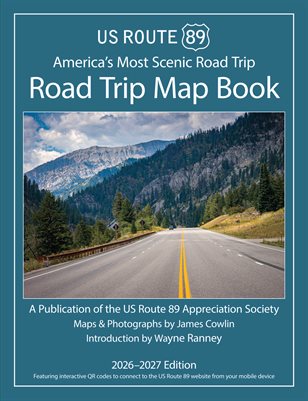
Great question. YES, this is an easy route for motorcycles. From Flagstaff to Prescott, it’s designated AZ-89A. From Flagstaff to Ash Fork to Prescott, it’s designated as both I-40 and AZ-89. From Prescott to Wickenburg, it’s designated AZ-89. All of these are clearly marked. After that, you’ll need to know where the general route ran. The brief description is US-60 from Wickenburg, across Phoenix, Tempe, Mesa, and Apache Junction. At the Florence Junction, take Hwy. 79 south to Oracle Junction, then Hwy. 77 south to Tucson. In Tucson, head to I-10 East, then take I-19 south to Nogales. Along I-19, you’ll see “Old Highway 89” on the map through Sahuarita, Tubac, etc. You can find all the details in our Road Trip Map Book, a great companion for the road.